
 English
 Chinese
 Japanese
 Korean
 Other
Other








칸 위젤: 불과 사랑으로 말했던 시인
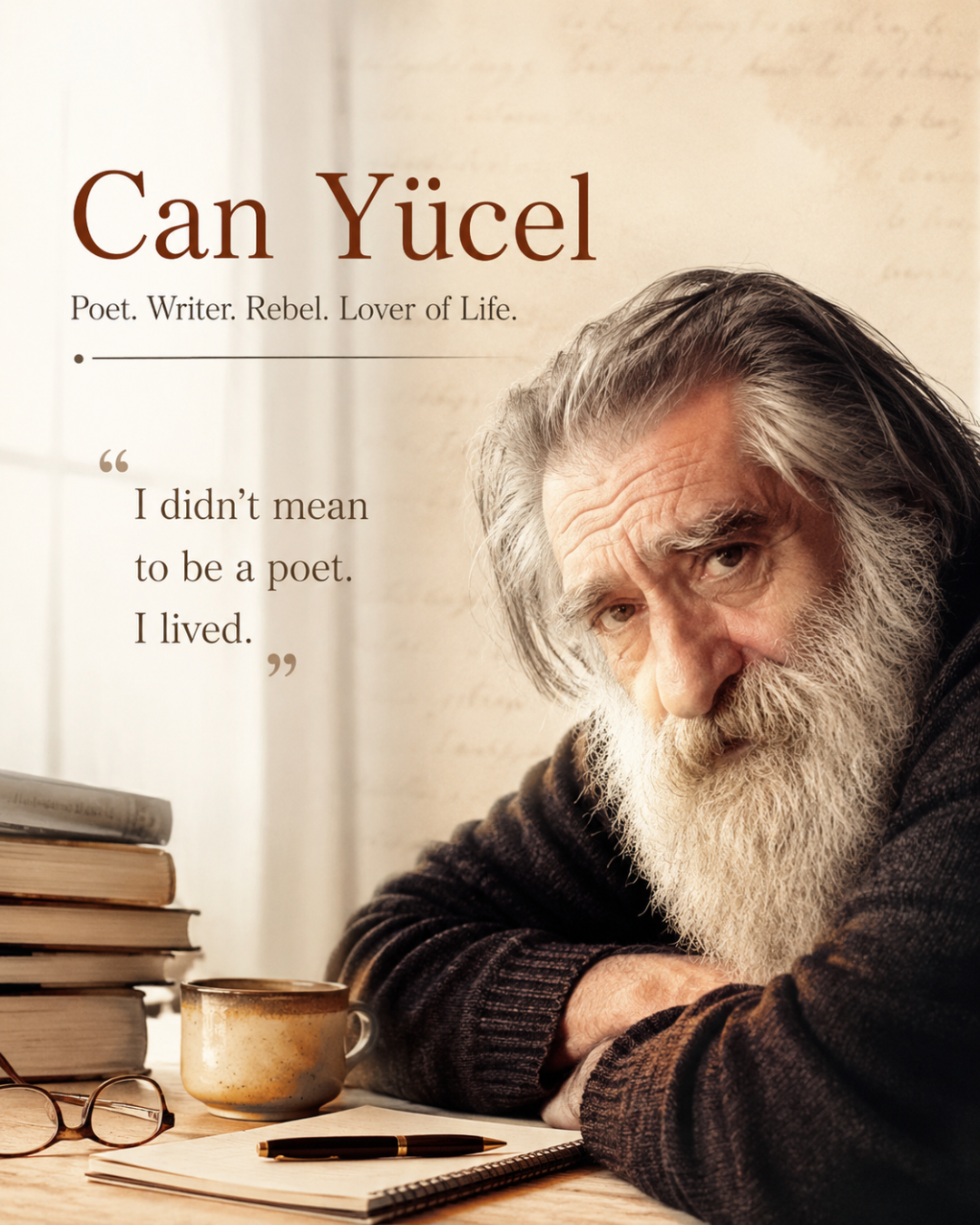
Can Yücel (1926–1999) was a poet whose words carried the weight of honesty, humor, and rebellion. Born in Istanbul, he grew up in a family deeply connected to literature—his father, Hasan Âli Yücel, was a prominent educator and politician who played a key role in shaping modern Turkish education. But Can Yücel carved his own path, one that often clashed with authority.
After studying law in Ankara and London, Yücel worked as a translator, bringing works of Shakespeare, Lorca, and Brecht into Turkish. His translations were not just linguistic exercises; they reflected his deep love for language and his belief in its power to challenge and inspire. But it was his poetry that made him a household name. His verses, often blunt and unfiltered, tackled love, politics, and the human condition with equal parts wit and warmth.
Yücel’s life was as colorful as his poetry. He spent time in prison for his political views, yet his spirit remained unbroken. His most famous works, like *Sevgi Duvarı* (The Wall of Love) and *Rengahenk*, are celebrated for their raw emotion and accessibility. Unlike many poets who cloaked their words in metaphor, Yücel wrote as he spoke—direct, passionate, and unafraid.
Even after his passing in 1999, his words continue to resonate. His poetry is read at protests, shared on social media, and quoted in everyday conversations. For many, Yücel is not just a poet but a voice of the people—a man who turned his life into art and his art into a mirror for society.
If you’re exploring Turkish literature, Yücel’s work is a great place to start. His poems are short, powerful, and often surprisingly funny, making them perfect for both newcomers and seasoned readers.