
 English
 Turkish
 Hindu
Hindu
 Other
Other









Aidat: Monthly Fees for Property Owners in Türkiye
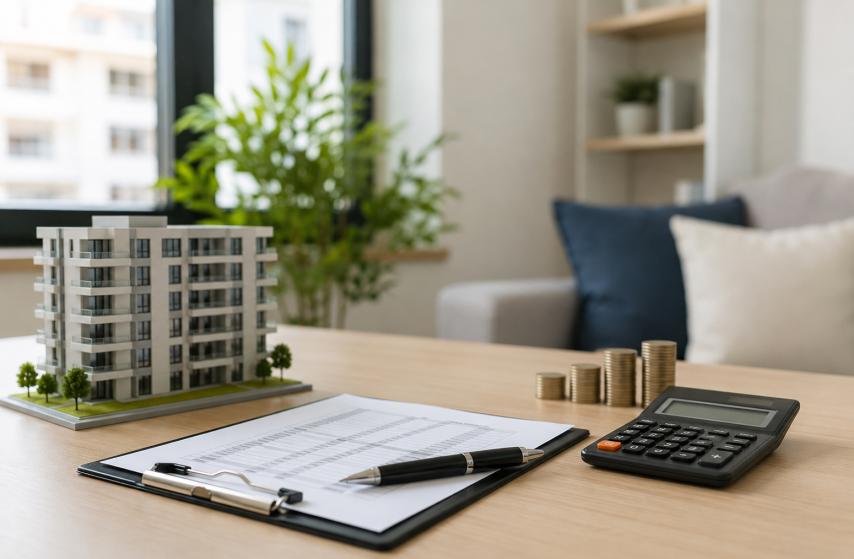
In Türkiye, "aidat" refers to the monthly maintenance fees that property owners are required to pay to cover the costs of managing and maintaining shared areas and services such as:
- Cleaning and maintenance of common areas (e.g., hallways, gardens, pools, elevators).
- Security services (e.g., guards, cameras, access control).
- Repairs and upgrades (e.g., fixing leaks, painting, renovating shared spaces).
- Utilities (e.g., water, electricity, and gas for common areas).
- Insurance (e.g., building insurance, earthquake insurance/DASK).
- Management salaries (e.g., site manager, caretakers).
The monthly fees ensure that the property remains well-maintained, safe, and functional for all residents.
For foreign property owners in Alanya or other parts of Turkey, understanding "aidat" is crucial to avoid legal issues, maintain good relationships with neighbours, and ensure the smooth operation of your property.
Who Decides the Amount?
The amount is determined at the general assembly, where all property owners can participate and cast their vote. This meeting is usually held once a year.
The budget is discussed and agreed upon between owners. The monthly fees are then calculated based on the budget and are typically divided equally among property owners. Another option is to share costs based on the land share of each individual unit. Since this is an unfair way to distribute fees, it is rarely used in the Alanya area.
When voting for the budget and distribution of monthly fees, a simple majority voting process is valid. The management, chairman, and board are subsequently responsible for collecting the agreed fees and ensuring the budget is followed.
Best Practices:
- ✅ Attend the General Assembly (or appoint a representative if you cannot be present). Your vote matters!
- ✅ Review the budget carefully before voting. Ask for a detailed breakdown of expenses.
- ✅ Request minutes of the meeting (in Turkish: Karar Tutanağı) to ensure transparency.
- ✅ If you disagree with the amount of the monthly fees, raise your concerns during the meeting and propose adjustments.
What Happens If You Don’t Pay Your Fees?
Failing to pay the monthly fees can lead to serious consequences, both legally and socially. Here’s what could happen:
- Management can charge late fees, and these can accumulate quickly, making your debt much larger.
- Some buildings also charge interest on overdue payments.
- If you consistently refuse to pay, the management can take legal action against you. The Condominium Ownership Law (Law No. 634) gives management the legal right to pursue unpaid fees in court via the debt collection system (icra).
- Not paying your monthly fees can damage your reputation among neighbours and the community.
Best Practices:
- ✅ Pay all fees on time to avoid late fees and legal trouble.
- ✅ If you’re facing financial difficulties, communicate with management immediately to discuss a payment plan.
- ✅ Keep records of all payments (receipts, bank transfers) in case of disputes.
How to Pay Your Monthly Fees
Paying the monthly fee is usually straightforward, but the method depends on your building or complex. Here are the most common ways:
Bank Transfer (Most Common and Recommended)The management will provide you with a bank account number (IBAN) for payments of monthly fees. The account should be in the name of the complex, not a private account.
You can transfer the amount from your Turkish bank account or international account (using Wise, Revolut, or your bank).
Always include your property details (e.g., apartment number, name, and period of payment) as a reference to avoid confusion.
Cash PaymentSome smaller buildings or complexes may accept cash payments directly to the site manager.
Always get a receipt (in Turkish: Makbuz) for cash payments to prove you’ve paid.
Best Practices:
- ✅ Confirm the payment method with your management before making any payments.
- ✅ Save all receipts and bank transfer confirmations for at least 2 years (in case of disputes).
- ✅ If paying by bank transfer, double-check the IBAN and recipient name to avoid errors.
Can the Management Collect Additional Fees Without Owners' Consent?
Yes, but only under specific conditions:
Emergency RepairsUnforeseen costs related to the daily operation and security of the complex can be collected by the management without calling for a general assembly.
Examples: Broken elevators, water leaks, pool pump failure, or similar issues.
Other Extraordinary ExpensesIf unexpected costs arise that do not compromise the security or daily operation of the building, management can propose additional fees. These fees must be approved by a general assembly.
Examples: Broken gym equipment, garden upgrades, pool umbrellas, and similar expenses.
Best Practices:
- ✅ Attend all general assembly meetings to stay informed about proposed additional fees.
- ✅ Request a detailed breakdown of any extra costs and vote accordingly.
- ✅ Keep records of all communications and decisions related to additional fees.
Other Questions and Considerations
What If I Sell My Property Mid-Year?If you sell your property, you are responsible for all fees up to the sale date. The new owner takes over payments from the date of title deed transfer.
Best Practice: Settle any outstanding fees before selling to avoid disputes.
Can I Pay Fees Annually Instead of Monthly?
Most complexes allow annual payment of fees, as this can be practical for foreign owners who do not live permanently in Türkiye.
Best Practice: Ask management if annual payments are an option.
What If the Complex Has No System for Collecting Fees?
In older buildings or small complexes, fees may not be formally collected. However, expenses still exist (e.g., cleaning, repairs), and owners may split costs informally.
Best Practice: If there’s no system, propose one to ensure fair cost-sharing.
Can I Refuse to Pay Fees If I Don’t Use the Facilities?
No. Paying monthly fees is a legal obligation for all property owners, regardless of whether you use the facilities (e.g., pool, gym).
Best Practice: If you rarely use the facilities, you can vote in the general assembly to reduce unnecessary expenses.
Can the List of Apartments with Unpaid Fees Be Made Public?
In Türkiye, the Personal Data Protection Law (Kişisel Verilerin Korunması Kanunu, KVKK) protects individuals' personal data, including financial information like unpaid aidat.
Publicly sharing a list of debtors (e.g., posting it on notice boards, WhatsApp groups, or social media) is considered a violation of privacy under KVKK.
If the data is shared among residents only (for instance, at a general meeting), for a valid reason (e.g., if the complex is out of funds), and not used for public shaming, it can be shared.
Can Owners with Unpaid Fees Still Use Complex Facilities?
Yes. Management cannot restrict any owner from accessing complex facilities. Furthermore, turning off electricity, cutting water supply, or similar actions are considered a criminal offense.
Who Is Responsible for Paying Monthly Fees for Rental Properties?
The property owner (you) is responsible for paying all fees, not the tenant. However, you can specify in the rental contract that the tenant must reimburse you for the cost of monthly fees. The responsibility to pay, however, remains with the property owner (you).
In Which Currency Are Fees Paid?
In Alanya, fees are usually paid in either Turkish Lira or Euro. However, if the fees are determined in Euro, payments in Turkish Lira must also be accepted.
Do you have more questions about fees or property ownership in Türkiye? Then feel free to reach out to us at 2Base for personalized advice!