
 English
 Turkish
 Hindu
Hindu
 Other
Other








Cemal Süreya: The poet who painted life with words in modern Türkiye
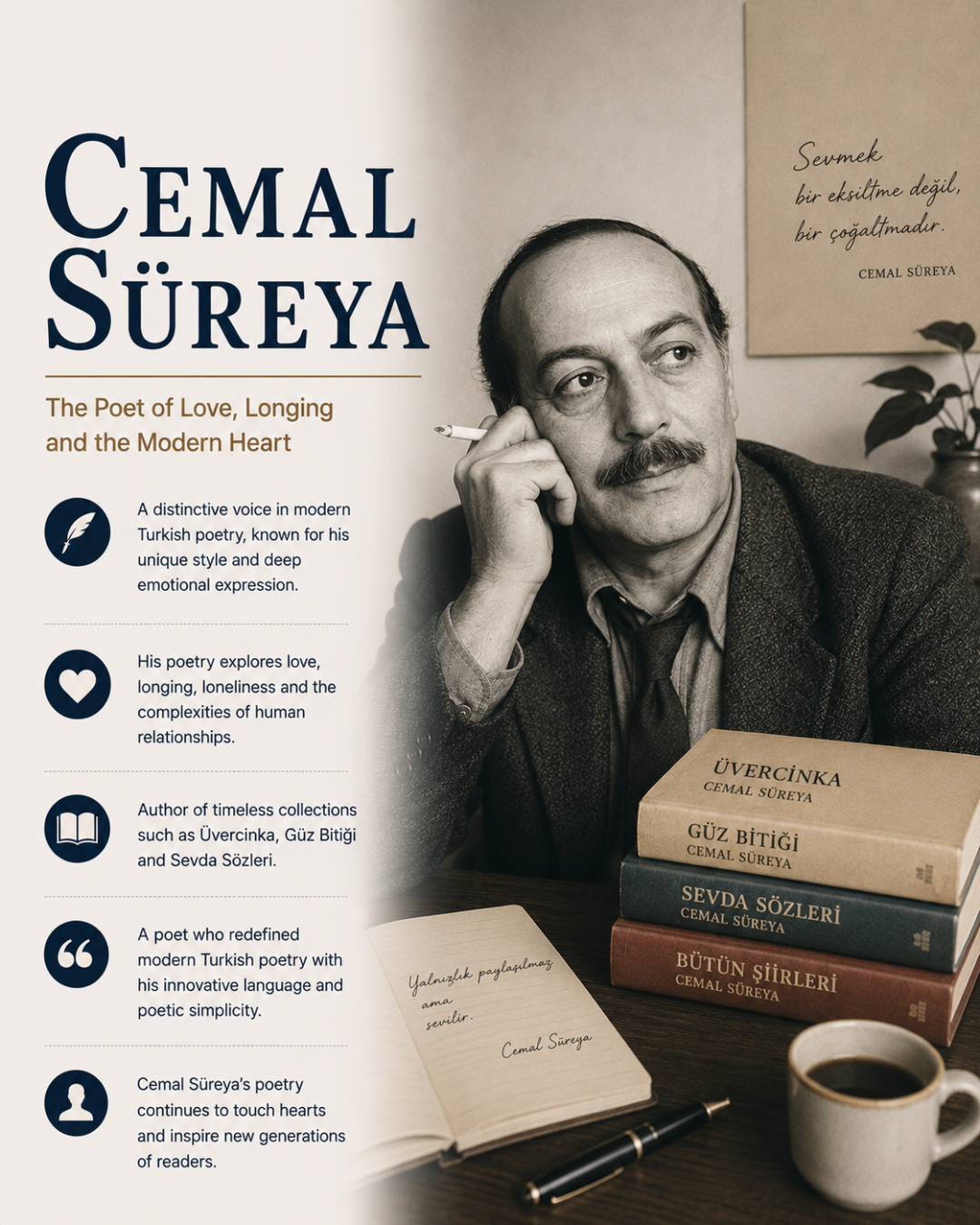
Cemal Süreya (1931–1990) remains one of Türkiye’s most influential poets, known for his unique style that blended modernism with deep emotional resonance. Born in Erzincan, Süreya moved to Istanbul as a child, where his love for literature began to take shape. His early life was marked by personal struggles, including the loss of his mother at a young age, which later influenced his poetic themes of love, loss, and existential reflection.
Süreya’s literary career took off in the 1950s when he co-founded the literary magazine Papirüs, a platform that became a cornerstone for modern Turkish poetry. His works, such as Üvercinka (1958) and Göçebe (1965), broke away from traditional forms, introducing free verse and a more conversational tone. His poetry often explored the complexities of human relationships, societal changes, and the search for identity in a rapidly modernizing Türkiye.
Beyond poetry, Süreya was a prolific essayist and translator, bringing works of French literature into Turkish. His contributions earned him the Yeditepe Poetry Prize in 1959, cementing his place in Turkish literary history. Even today, his words continue to inspire new generations of readers and writers.
For those interested in modern Turkish literature, Süreya’s works offer a window into the cultural and emotional landscape of 20th-century Türkiye. His ability to weave personal and universal themes into his poetry makes his work timeless and deeply relatable.