
 English
 Turkish
 Hindu
Hindu
 Other
Other









Daron Acemoğlu: The economist shaping global policy and development
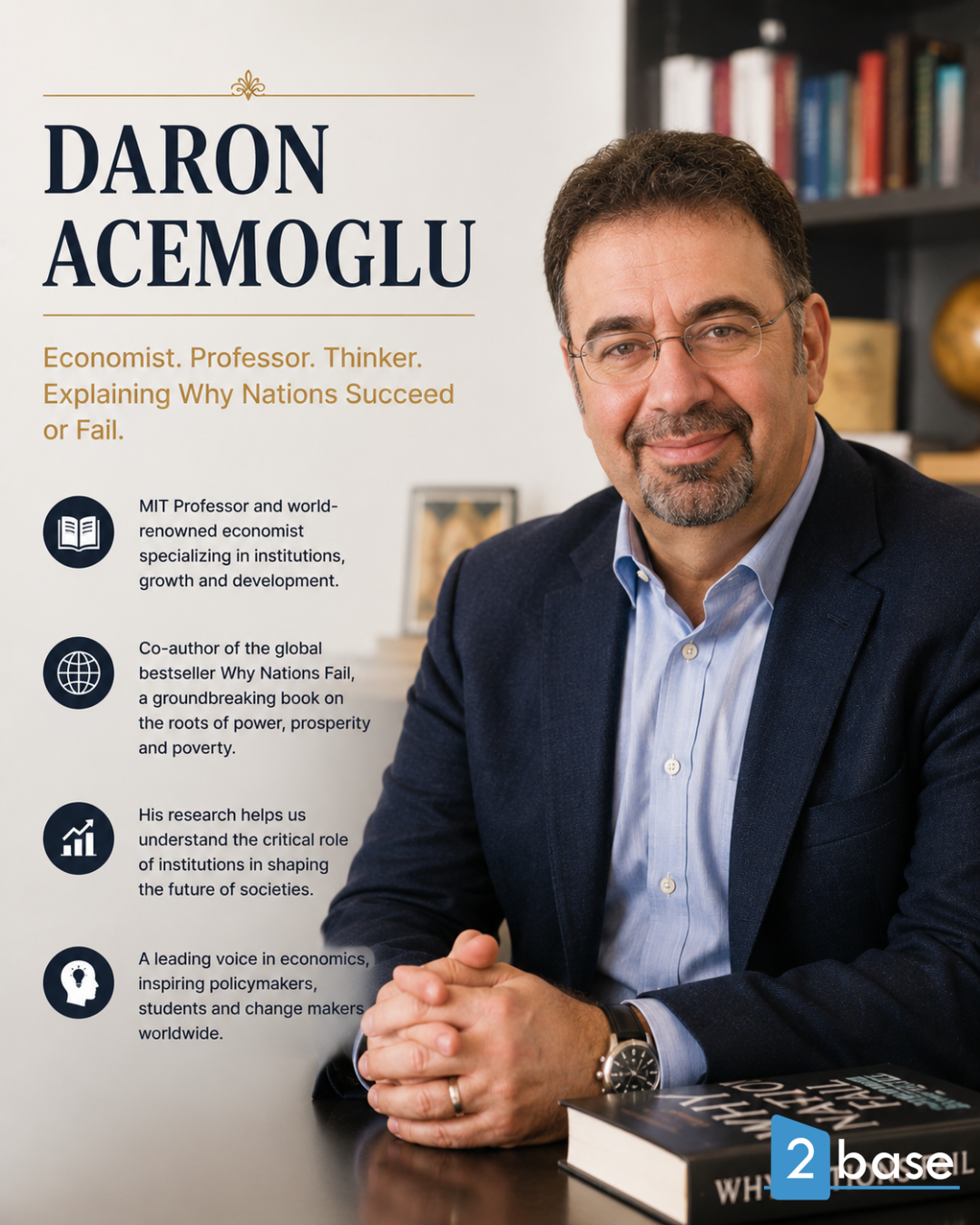
Born in Istanbul in 1967, Daron Acemoğlu has become one of the most influential economists of his generation. After completing his education at the University of York and the London School of Economics, he joined the faculty at the Massachusetts Institute of Technology (MIT), where he currently serves as the Elizabeth and James Killian Professor of Economics.
Acemoğlu’s work focuses on the role of institutions in economic development. His research, often conducted with long-time collaborator James A. Robinson, explores why some nations thrive while others struggle. Their book, Why Nations Fail, argues that inclusive political and economic institutions are key to sustained prosperity. The book has been translated into over 40 languages and has sparked global discussions on policy and governance.
Beyond his academic contributions, Acemoğlu’s ideas have influenced policymakers worldwide. His research on labor markets, inequality, and technological change provides insights into how economies can adapt to challenges like automation and globalization. He has received numerous awards, including the John Bates Clark Medal in 2005, often considered a precursor to the Nobel Prize in Economics.
Despite his global impact, Acemoğlu remains connected to Türkiye, frequently contributing to discussions on the country’s economic and political landscape. His work continues to shape how economists, leaders, and students think about growth, democracy, and development.
Timeline of Key Achievements:
- 1967: Born in Istanbul, Türkiye.
- 1992: Earns Ph.D. in Economics from the London School of Economics.
- 1993: Joins MIT as an assistant professor.
- 2005: Receives the John Bates Clark Medal.
- 2012: Publishes Why Nations Fail with James A. Robinson.
- 2019: Named Institute Professor at MIT, the highest honor for faculty.