
 English
 Turkish
 Hindu
Hindu
 Other
Other









Mimar Sinan: The Architect Who Shaped the Ottoman Empire's Skyline
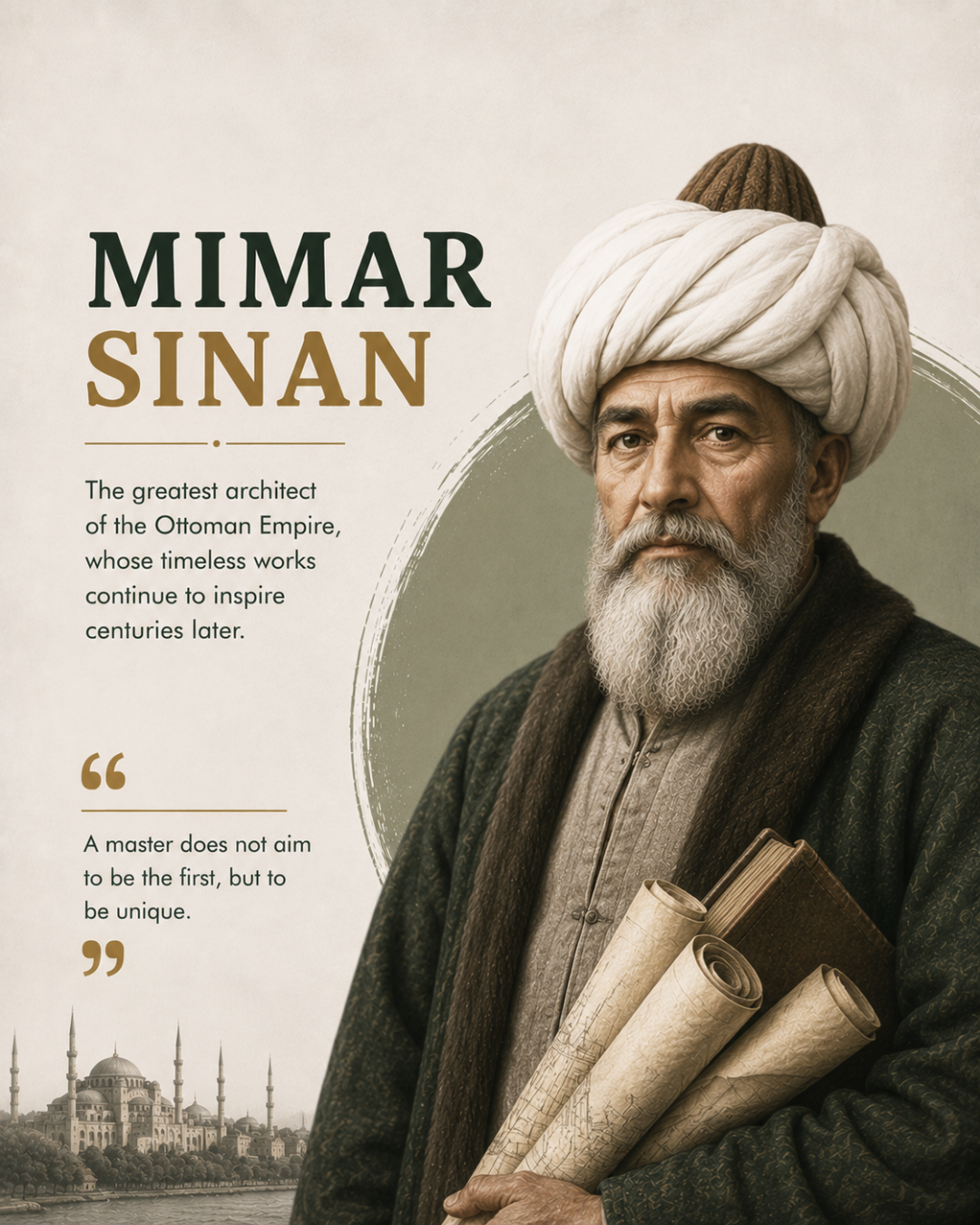
Born in 1489 in a small village in Anatolia, Mimar Sinan began his journey as a military engineer before rising to become the chief architect of the Ottoman Empire. His career spanned nearly 50 years, during which he designed over 300 structures, including mosques, bridges, and palaces. His work not only defined the skyline of Istanbul but also set new standards in Islamic architecture. 🌍
Sinan’s most celebrated masterpiece is the Süleymaniye Mosque, built between 1550 and 1557 for Sultan Süleyman the Magnificent. The mosque’s grand dome, towering minarets, and harmonious proportions reflect Sinan’s deep understanding of mathematics and aesthetics. Another iconic work, the Selimiye Mosque in Edirne, is often regarded as his finest achievement, showcasing his ability to blend structural innovation with artistic beauty. 🕌
Beyond mosques, Sinan’s legacy includes aqueducts, hospitals, and bridges, such as the Mağlova Aqueduct near Istanbul, which still stands today. His designs were not just visually striking but also highly functional, solving engineering challenges like earthquake resistance and acoustics. 🏗️
Sinan’s influence extended beyond his lifetime. Many of his apprentices went on to design their own masterpieces, ensuring his techniques and vision lived on. Today, his works remain symbols of Ottoman grandeur and continue to inspire architects worldwide. If you visit Istanbul or Edirne, his structures are a must-see for anyone interested in history and architecture. 📜
Timeline of Key Achievements:
- 1489: Born in Ağırnas, Anatolia.
- 1538: Appointed chief architect of the Ottoman Empire.
- 1550-1557: Designed the Süleymaniye Mosque in Istanbul.
- 1568-1574: Completed the Selimiye Mosque in Edirne.
- 1588: Passed away in Istanbul, leaving behind a legacy of over 300 structures.