
 English
 Turkish
 Hindu
Hindu
 Other
Other







Nazım Hikmet: The Voice of Turkish Poetry and Social Change
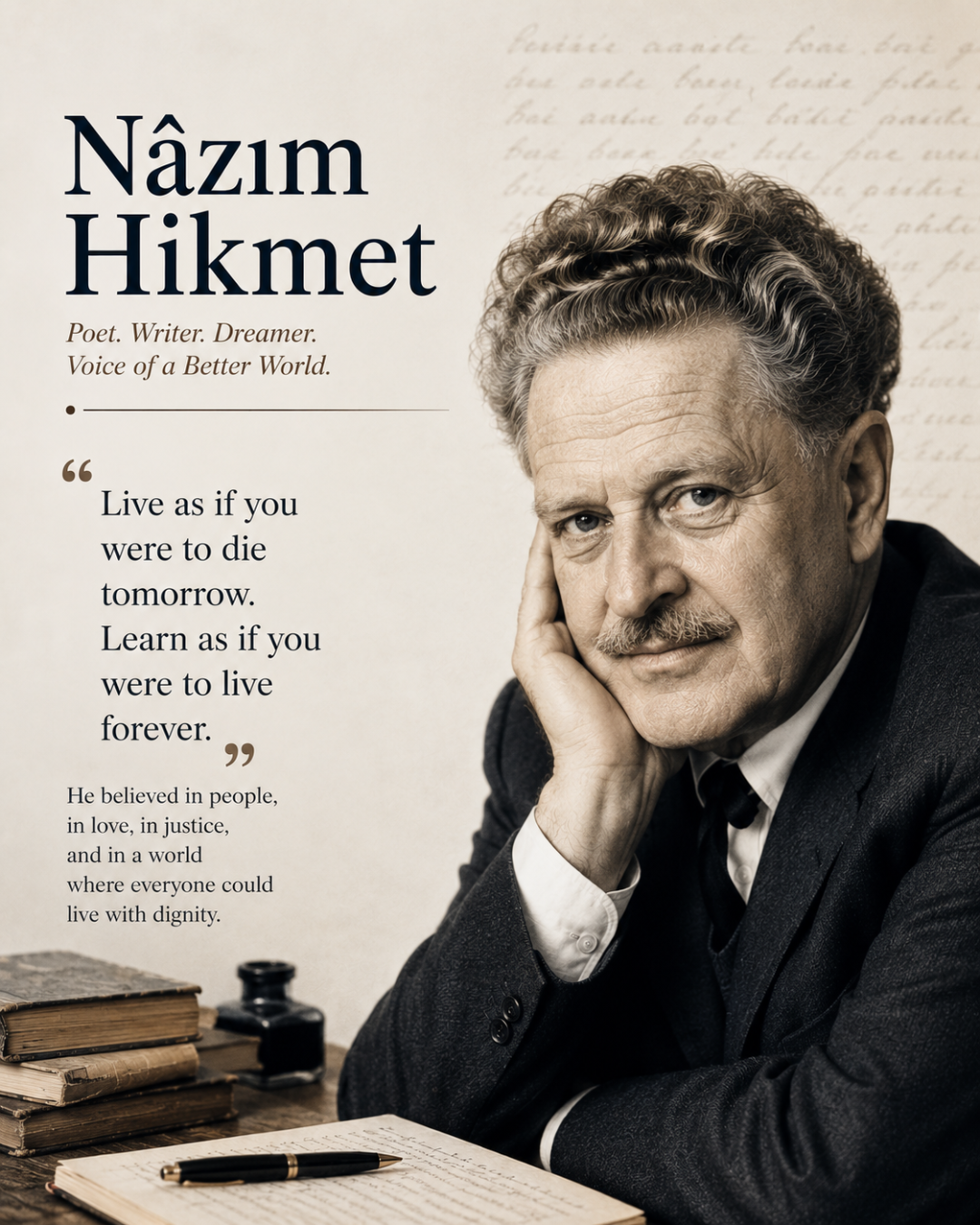
Nazım Hikmet (1902–1963) is one of Turkey’s most influential poets, known for his powerful verses that captured the spirit of social justice and human resilience. Born in Thessaloniki, then part of the Ottoman Empire, Hikmet’s early life was marked by a deep curiosity for literature and politics. He studied at the prestigious Galatasaray High School in Istanbul before traveling to the Soviet Union, where he was exposed to socialist ideals that would later shape his work.
Hikmet’s poetry broke away from traditional forms, embracing free verse and bold themes. His words often reflected the struggles of the working class, the fight against oppression, and the hope for a better future. Despite facing censorship and imprisonment for his political views, his literary contributions remained unwavering. Works like Human Landscapes from My Country and The Epic of Sheikh Bedreddin are celebrated for their emotional depth and social commentary.
His life was as dramatic as his poetry. Hikmet spent over a decade in Turkish prisons for his political beliefs, yet his spirit remained unbroken. In 1951, he was stripped of his Turkish citizenship and lived in exile until his death in Moscow. Despite the challenges, his legacy endures, with his poems translated into over 50 languages and inspiring artists, activists, and readers worldwide.
Today, Nazım Hikmet is remembered not just as a poet but as a symbol of artistic courage and the power of words to challenge injustice. His work continues to resonate, reminding us of the enduring connection between art and humanity. 🌍📖
Timeline of Key Achievements:
- 1902: Born in Thessaloniki.
- 1921: Moves to the Soviet Union, studies at the Communist University of the Toilers of the East.
- 1924: Returns to Turkey, begins publishing poetry and political writings.
- 1938: Sentenced to 28 years in prison for his political activities.
- 1950: Released from prison after an international campaign for his freedom.
- 1951: Stripped of Turkish citizenship; lives in exile in the Soviet Union.
- 1963: Dies in Moscow; buried in the Novodevichy Cemetery.