
 English
 Turkish
 Hindu
Hindu
 Other
Other






Yahya Kaptan: The Brave Ottoman Guerrilla Leader of the Turkish War of Independence
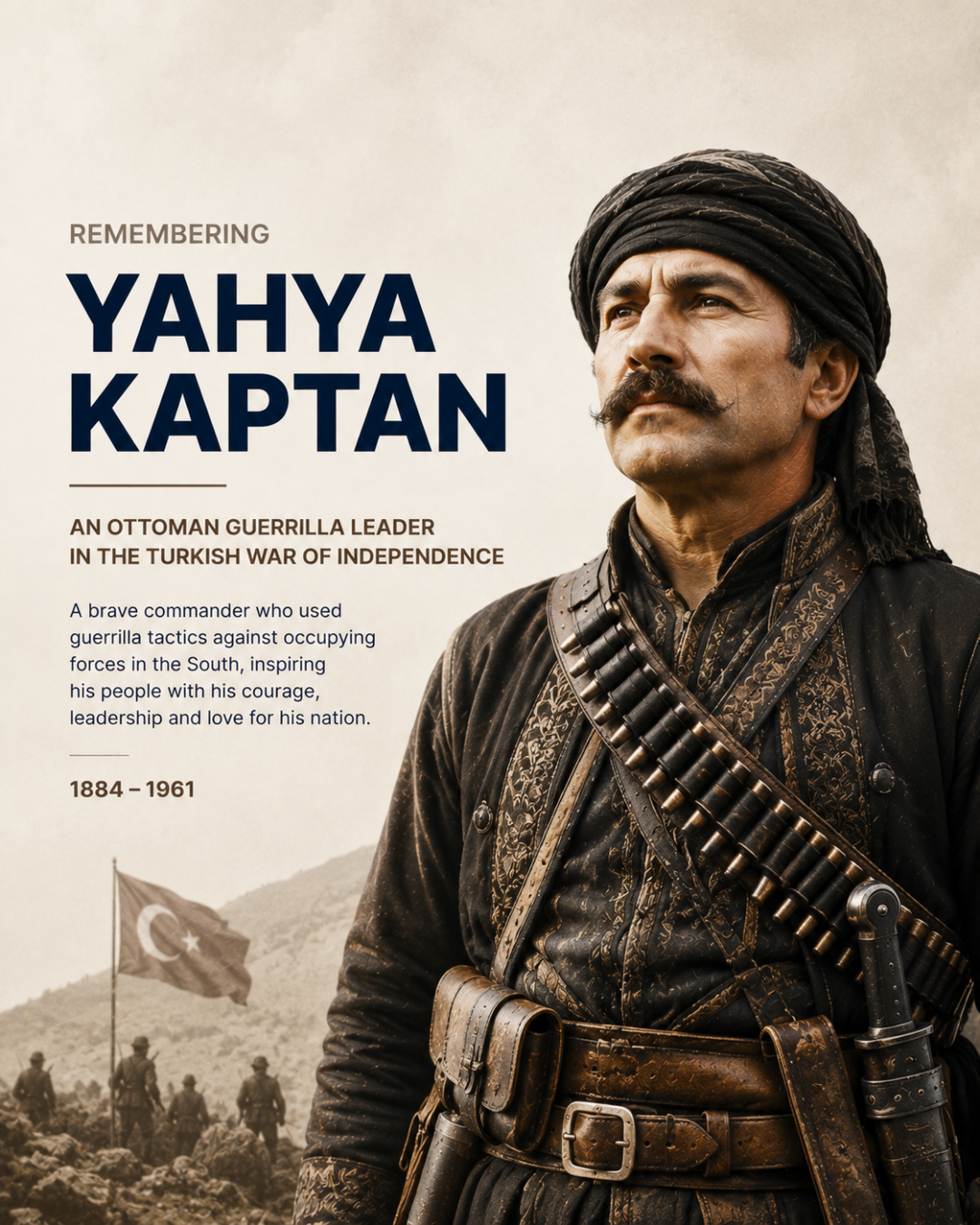
Yahya Kaptan was born in 1870 in the village of Kandıra, near İzmit, during the late Ottoman era. Little is known about his early life, but his legacy was forged during one of Türkiye’s most turbulent periods—the Turkish War of Independence (1919–1923).
After the defeat of the Ottoman Empire in World War I, Allied forces occupied large parts of Anatolia. Yahya Kaptan emerged as a leader of local guerrilla forces, known as Kuvâ-yi Milliye (National Forces), resisting Greek and British occupation in the İzmit region. His tactics, often involving surprise attacks and sabotage, disrupted enemy supply lines and boosted morale among Turkish fighters.
Kaptan’s most notable contribution came in 1920–1921, when his forces engaged in fierce clashes with Greek troops advancing toward Ankara. Though outnumbered, his strategic raids delayed enemy movements, giving the Turkish Grand National Assembly time to organize resistance. His efforts earned him recognition from Mustafa Kemal Atatürk, who later praised his bravery.
Tragically, Yahya Kaptan was captured by British forces in 1921 and executed in İzmit. His sacrifice became a symbol of resistance, and today, streets, schools, and monuments across Türkiye bear his name in honor of his role in the nation’s independence.
For those exploring Türkiye’s history, Yahya Kaptan’s story offers a glimpse into the grassroots struggle that shaped the modern republic. His courage remains a testament to the power of local resistance in the face of overwhelming odds.