
 English
 Turkish
 Other
Other










Vekalet (Power of Attorney) in Turkey – What It Means for Property Buyers

Vekalet (pronounced veh-kah-let) is the Turkish term for power of attorney (PoA). It is a legal document that authorizes a designated person (the vekil) to act on behalf of another (the müvekkil) in specific or general matters, including real estate transactions in Turkey.
A vekalet must be issued by a notary public (noter) in Turkey and can be tailored to grant limited or broad powers. For property-related matters, it often covers tasks such as signing contracts, applying for title deeds (tapu), or managing bank transactions. The document is valid until revoked or until an expiration date, if specified.
Foreigners frequently use a vekalet when unable to be physically present in Turkey for legal or administrative steps. The scope of authority is strictly defined in the document—some vekalet permits allow only property purchase procedures, while others may include rights to sell, rent, or manage the property.
A power of attorney can be made in 3 ways:
- At a Turkish notary (noter) if in Turkey
- at a Turkish consulate/embassy in your home country
- or at the public notaries office in your home country.
Each way has its own set of strict regulations that must be followed for the power of attorney to be legally accepted.
Important: A vekalet does not transfer ownership—it only delegates legal authority. The original document (or a notarized copy) is required for official procedures, and some institutions may request an Apostille certification if issued abroad.
| Turkish Term | English Equivalent | Notes |
|---|---|---|
| Vekalet | Power of Attorney (PoA) | General term for legal representation. |
| Vekil | Attorney/Representative | The person authorized to act. |
| Müvekkil | Principal/Grantor | The person granting authority. |
| Genel vekalet | General Power of Attorney | Broad authority (e.g., financial, legal). |
| Özel vekalet | Special/Limited Power of Attorney | Restricted to specific tasks (e.g., property purchase). |
| Noter vekaleti | Notarized Power of Attorney | Required for legal validity in Turkey. |
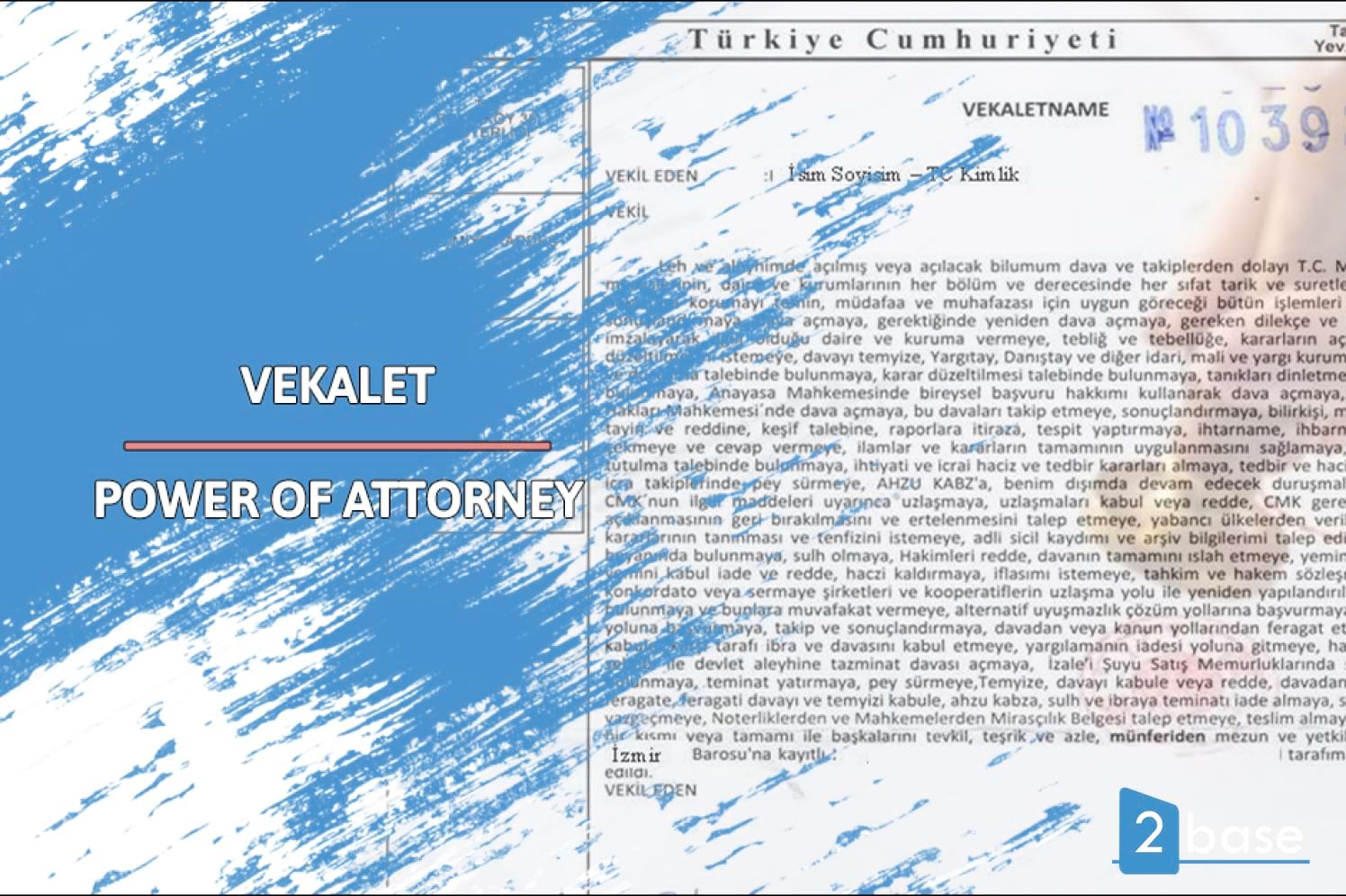
Notarization in Turkey or at a consulate abroad.
Foreigners can obtain a vekalet in three ways: at a Turkish notary (noter) if in Turkey, at a Turkish consulate/embassy in their home country or at the public notary also in their home country. The process requires:
1. A valid passport (original + copy). 2. A Turkish tax number (if applicable). 3. Clear definition of the vekil’s authorities (e.g., ‘buy property in Antalya’). 4. Payment of notary fees. Always check if additional documentation is required.
The document must be in Turkish. If drafted abroad, it may need apostille certification or translation by a sworn translator upon arrival in Turkey.
A legal power of attorney for property matters.
A vekalet (power of attorney) in Turkey is a legally binding document that authorizes a designated person (the vekil) to act on your behalf in real estate transactions. This includes buying, selling, or managing property when you cannot be physically present.
It must be notarized in Turkey or at a Turkish consulate abroad. The scope of authority is strictly defined—some vekalets allow full control, while others limit actions to specific tasks like signing contracts or paying taxes.
Foreigners often use a vekalet to simplify remote property purchases or legal procedures, but misuse risks fraud. Always verify the vekil’s trustworthiness and the document’s precise terms.
Fraud, misuse, or unauthorized actions by the vekil.
The primary risk of a vekalet is the vekil acting beyond the agreed scope. Common issues include:
• Selling your property without consent if the vekalet grants broad powers. • Taking loans against the property if authorized. • Signing contracts with unfavorable terms. • Transferring ownership to third parties fraudulently.
Turkish law holds the principal (you) liable for the vekil’s actions if within the vekalet’s terms. To mitigate risks, limit the vekil’s authority to specific tasks (e.g., ‘only sign purchase contract for [address]’) and revoke the vekalet immediately after use.
Yes, if the vekalet explicitly permits property sales.
A vekalet can authorize a vekil to sell your Turkish property without your physical presence, but only if the document explicitly states this power. Key requirements:
• The vekalet must mention the property’s details (title deed tapu number, address). • The vekil must follow Turkish sale procedures (e.g., obtaining a satış vaadi or sale promise). • Taxes (e.g., capital gains) remain your responsibility unless the vekalet transfers this duty.
Note: Some land registry offices (Tapu Dairesi) may require additional verification if the seller isn’t present. Always confirm the vekalet’s sale clause with a Turkish lawyer.
Typically 1 year, but customizable or until revoked.
A vekalet in Turkey has no fixed expiry by law, but notaries often set a default validity of 1 year unless specified otherwise. You can define a shorter or longer period (e.g., 6 months or 5 years) in the document.
The vekalet remains active until:
• The expiry date (if stated). • You revoke it via a notary. • The vekil’s or your death. • Completion of the specified task (e.g., ‘sign purchase contract’).
For property transactions, shorter durations (e.g., 3–6 months) are safer to limit exposure to misuse.
General is broad; special is task-specific.
In Turkey, a general vekalet grants the vekil wide-ranging powers (e.g., manage all financial/legal affairs, including property sales or bank transactions). This is high-risk for foreigners due to potential misuse.
A special vekalet limits authority to specific tasks, such as:
• ‘Sign the purchase contract for [property address].’ • ‘Pay property taxes for 2024.’ • ‘Apply for tapu transfer at [Land Registry Office].’
For property deals, a special vekalet is safer. Turkish notaries can draft either type, but you must explicitly request the scope. Always translate and review the terms before signing.
Yes, via notary or death of either party.
You can revoke a vekalet at any time by:
1. Visiting a Turkish notary to sign a vekalet iptali (revocation document). 2. Sending a revocation notice via the Turkish consulate if abroad (must be notarized). 3. The vekil’s or your death automatically voids it.
Revocation takes effect once recorded in the notary system. However, third parties (e.g., banks, Tapu offices) may not be instantly notified. To prevent fraud, inform all relevant institutions (e.g., your lawyer, the Land Registry) in writing.
No fees apply for revocation, but notary costs are charged for processing.
Yes, Turkish is mandatory for legal validity.
All vekalet documents for Turkish property transactions must be in Turkish to be legally valid. If drafted abroad (e.g., at a consulate), it may be bilingual but the Turkish version prevails.
Key rules:
• Foreign-language vekalets require a sworn translation by a Turkish-notarized translator. • The notary will verify the translation matches the original. • Handwritten additions in non-Turkish are invalid.
For clarity, have a Turkish lawyer review the document before signing, especially if you don’t speak Turkish. Misinterpretations can lead to unintended authorities granted to the vekil.
From signing contracts to full property management.
A vekil’s powers in a Turkish property vekalet depend on the document’s wording. Common authorities include:
• Buying/selling: Sign purchase/sale contracts, transfer tapu. • Legal: Represent you in court for property disputes. • Financial: Pay taxes, utilities, or mortgage installments. • Administrative: Apply for permits (e.g., iskan occupancy certificate). • Rental: Lease the property, collect rent, or evict tenants.
Explicitly list each power; vague terms like ‘all property matters’ can be dangerous. For example, a vekalet for ‘tax payments’ won’t allow the vekil to sell the property unless separately stated.
No, but it’s useful for remote transactions.
A vekalet is not mandatory for foreigners buying property in Turkey. You can complete all steps in person, including signing the tapu (title deed) at the Land Registry.
However, a vekalet becomes necessary if you:
• Cannot travel to Turkey for signings. • Need someone to handle bureaucracy (e.g., tax payments, utility setup). • Want a local representative for post-purchase tasks (e.g., renovations).
Alternatives include using a Turkish lawyer (with a limited vekalet) or power of attorney services from your home country (if apostilled and translated). Always weigh the risks of granting authority.
Also read

Asansör (Elevator) – What It Means in Turkish Real Estate

Bina (Building) – Understanding Turkish Real Estate Terms

Damga vergisi (stamp duty) in Turkey – explained for buyers

Emlak (Real Estate) in Turkey – A Simple Explanation for Foreign Buyers

Emlakçı (Real Estate Agent) – Turkey Property Guide

Hisseli tapu (shared title deed in Turkey)

Müteahhit (contractor) – key role in Turkish real estate

Göç İdaresi (Migration Office) in Turkey – Key Facts for Foreigners