
 English
 Turkish
 Other
Other










Kapora (down payment) in Turkey – what buyers must know

Kapora is the Turkish term for a down payment or deposit made during a real estate transaction. It serves as a financial commitment from the buyer to the seller, securing the property until the full purchase price is paid and the title deed (tapu) is transferred.
In Turkey, kapora is typically paid after the sales agreement (satış vaadi sözleşmesi) is signed but before the final transfer of ownership. The amount varies—often between 5 and 10% of the total property price—depending on negotiations between the buyer and seller. Unlike in some countries, Turkish law does not mandate a fixed percentage for kapora; it is agreed upon privately.
The payment is usually made in cash (TRY or foreign currency) or via bank transfer. A written receipt (makbuz) is essential to prove the transaction.
While not a legal requirement, kapora is a common practice in Turkey’s real estate market, providing security for both parties during the transaction process.
| Turkish Term | English Equivalent | Notes |
|---|---|---|
| Kapora | Down payment | Most common term in real estate. |
| Kapora | Deposit | Used interchangeably, but implies a refundable sum. |
| Kapora | Earnest money | Legal term emphasizing the binding nature of the payment. |
| Peşinat | Advance payment | Less common in real estate; broader financial use. |
| Avans | Advance | General term, not specific to property transactions. |

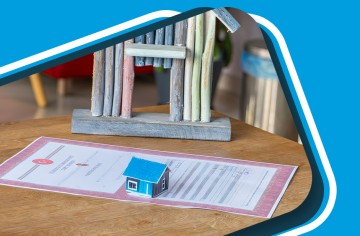
A deposit securing a property purchase in Turkey.
Kapora is a down payment or deposit in Turkish real estate. It secures a property sale before the final contract. Typically paid in cash or bank transfer, it ranges from 5% to 10% of the property price. The amount is deducted from the total cost upon completion.
Once paid, the seller removes the property from the market. It’s a legally binding commitment but not the final sale.
Yes, but not the same as a final sales contract.
In Turkey, kapora is a preliminary agreement under the Turkish Code of Obligations. It’s legally binding once signed by both parties. The document should include:
• Property details (title deed info, address).
• Kapora amount and payment method.
• Deadline for the final contract.
• Penalties for withdrawal (e.g., forfeiture or double refund).
Without a written agreement, disputes may arise. Notarization strengthens its validity but isn’t mandatory.
Usually between 5% and 10% of the property price.
The kapora amount in Turkey varies by:
• Market demand: Competitive areas may require more.
• Seller’s terms: Some insist on fixed amounts (e.g., €10,000).
• Buyer’s negotiation: Foreigners may pay more due to perceived risk.
Always confirm the percentage before signing. The remaining balance is paid at the title deed transfer (tapu).
Kapora secures the sale; tapu transfers ownership.
Kapora is a deposit to reserve a property. It’s a preliminary step with no ownership transfer. The tapu (title deed) is the final legal document proving ownership.
Key differences:
• Stage: Kapora comes first; tapu is the last step.
• Payment: Kapora is partial (5–10%); tapu requires the full balance.
• Legal effect: Kapora is a promise; tapu is proof of ownership.
• Process: Tapu transfer occurs at the Land Registry Office (Tapu Dairesi).
Rarely, as kapora is separate from mortgage approvals.
Turkish banks do not finance kapora. It must be paid upfront by the buyer. Mortgages (if approved) cover the remaining balance after kapora.
Key points:
• Kapora proves serious intent to banks but isn’t part of the loan.
• Foreigners may need to show kapora receipts for mortgage applications.
• Some developers offer payment plans for kapora (e.g., installments), but this is rare.
Always confirm with the bank before paying kapora if relying on a mortgage.
Passport, property details, and a signed contract.
A valid kapora agreement in Turkey requires:
• Buyer’s passport (foreigners) or ID (Turkish citizens).
• Seller’s title deed (tapu) or sales authorization if acting through an agent.
• Property details (address, cadastral info, price).
• Written contract (Turkish language; translations recommended).
• Payment receipt (bank transfer or signed cash receipt).
Notarization is optional but adds legal security. Some agents use preprinted forms—verify all terms.
Both are common, but bank transfers are safer.
Kapora in Turkey can be paid via:
• Bank transfer: Preferred for traceability. Use the seller’s Turkish bank account and note the
property details in the reference.
• Cash: Riskier; always get a signed receipt with seller’s ID and property info.
• Escrow services: Rare but possible for high-value deals (e.g., through a lawyer).
Avoid informal payments (e.g., envelopes of cash). Foreigners should keep records for tax and legal purposes.
No direct taxes, but fees may apply during tapu transfer.
Kapora itself is not taxed in Turkey. However:
• Bank fees may apply for transfers.
• Notary fees (if the agreement is notarized).
• Future taxes: The full property price (including kapora) is subject to title deed tax
and VAT (1–18%) at tapu transfer.
Foreigners should keep kapora receipts for tax declarations in their home country.
Also read

Havuz (Swimming Pool) – Meaning in Turkish Real Estate

Kat mülkiyeti kanunu (Condominium Ownership Law)

Asansör (Elevator) – What It Means in Turkish Real Estate

Bina (Building) – Understanding Turkish Real Estate Terms

Damga vergisi (stamp duty) in Turkey – explained for buyers

Emlak (Real Estate) in Turkey – A Simple Explanation for Foreign Buyers

Emlakçı (Real Estate Agent) – Turkey Property Guide
Hisseli tapu (shared title deed in Turkey)