
 English
 Turkish
 Other
Other










Vergi Dairesi (Tax Office) in Turkey – What Property Owners Need to Know

The Vergi Dairesi (Turkish: Tax Office) is the government authority in Turkey responsible for collecting taxes, including those related to property ownership, transactions, and income. It operates under the Revenue Administration (Gelir İdaresi Başkanlığı), the national body overseeing tax regulations.
For property owners in Turkey, the Vergi Dairesi handles key tax obligations such as:
- Property Tax (Emlak Vergisi) – Annual tax based on the property’s declared value.
- Capital Gains Tax (Değer Artış Kazancı Vergisi) – Applied when selling a property for profit.
- Stamp Duty (Damga Vergisi) – A fee on legal documents, including title deeds.
- Income Tax (Gelir Vergisi) – For rental income generated from the property.
Each district in Turkey has its own local Vergi Dairesi branch, where owners must register, file returns, and pay dues. Taxpayers receive a vergi numarası (tax number), essential for all financial and legal transactions. Non-residents may appoint a tax representative or use online services via the Interactive Tax Office (İnteraktif Vergi Dairesi).
| Turkish Term | English Equivalent | Notes |
|---|---|---|
| Vergi Dairesi | Tax Office | Primary government body for tax collection. |
| Gelir İdaresi Başkanlığı (GİB) | Revenue Administration | National authority overseeing Vergi Dairesi branches. |
| Vergi Numarası | Tax Number | Unique identifier for taxpayers (required for property transactions). |
| İnteraktif Vergi Dairesi (IVD) | Interactive Tax Office | Online portal for tax filings (ivd.gib.gov.tr). |
| Emlak Vergisi | Property Tax | Annual tax paid to the local Vergi Dairesi. |
| Beyanname | Tax Return | Document submitted to declare income/property taxes. |
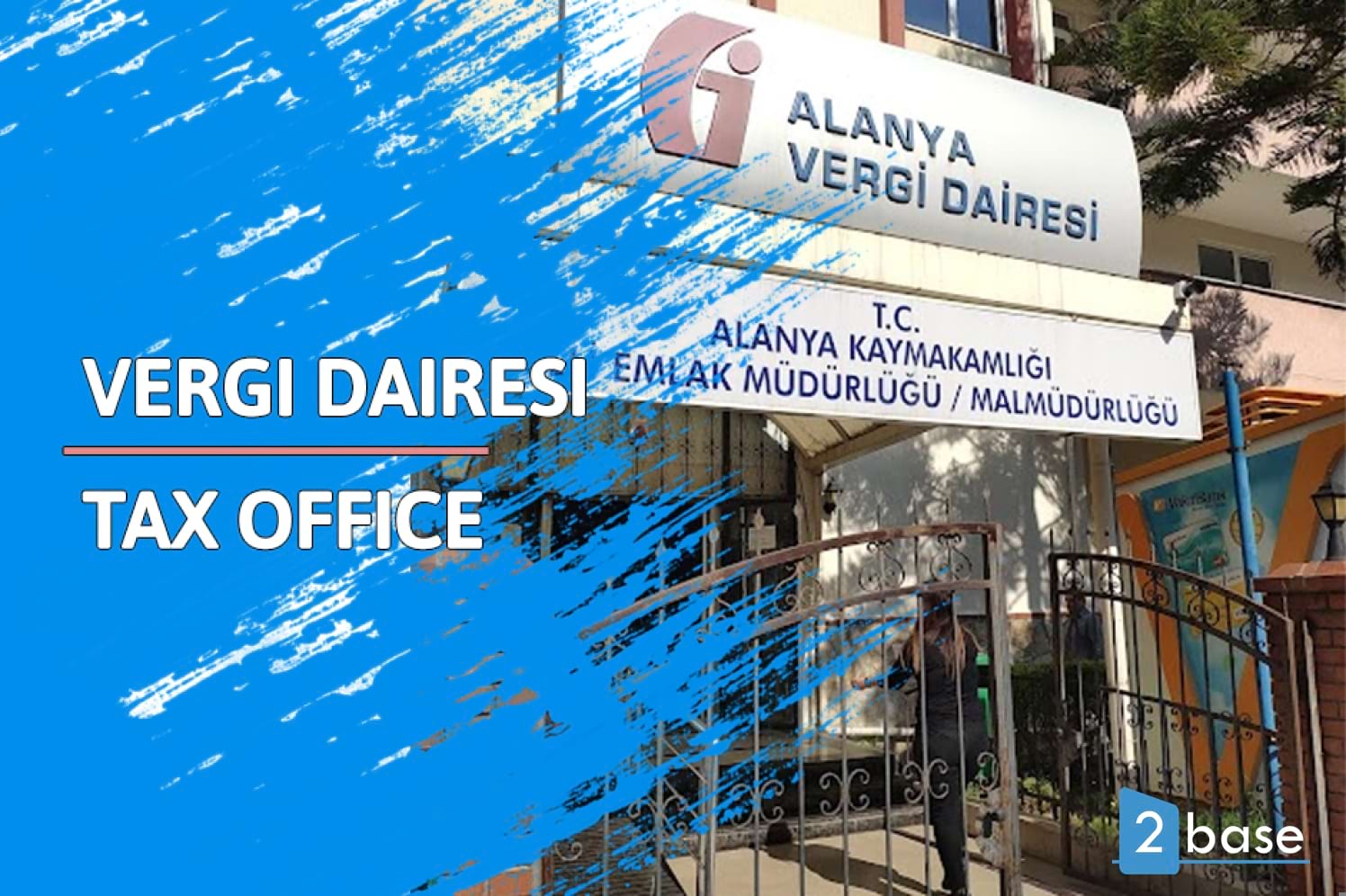
Turkey’s official tax authority for property-related taxes.
The Vergi Dairesi (Tax Office) is the government institution in Turkey responsible for collecting taxes, including those related to real estate. For property owners, it handles transactions like title deed tax (tapu harcı), annual property tax (emlak vergisi), and capital gains tax upon sale. All foreign buyers must interact with this office to fulfill tax obligations.
The office linked to your property’s location.
Each district in Turkey has its own Vergi Dairesi. You must visit the office in the district where your property is registered. For example, if your property is in Antalya’s Kaleiçi district, you’ll use the Antalya Kaleiçi Vergi Dairesi. The title deed (tapu) specifies the correct office. Online services may also direct you.
Passport, tax number, and property title deed.
Foreigners visiting a Vergi Dairesi typically need: a valid passport, Turkish tax number (vergi numarası), property title deed (tapu), and any prior tax notices. If paying annually, bring the previous year’s tax receipt. Some offices may require a Turkish translator or a power of attorney if you’re represented by someone else.
Yes, via the Turkish Revenue Administration’s website.
Turkey’s Vergi Dairesi allows online tax payments through the Interactive Tax Office (IVD) portal. Foreigners need a Turkish tax number and an internet banking account (or credit card) linked to a Turkish bank. Some taxes, like annual property tax (emlak vergisi), can be paid this way, but first-time payments may require in-person verification.
Annual property tax based on property value.
Emlak vergisi is Turkey’s annual property tax, calculated by the Vergi Dairesi based on the property’s assessed value (vergi değeri). The tax is split into two installments (May and November). Foreign owners receive notices by mail or via the IVD portal, but non-payment incurs penalties.
Penalties, interest, and potential legal action.
Failing to pay taxes to the Vergi Dairesi triggers late fees (daily interest) and penalties. Unpaid property taxes can lead to liens on your property, blocking future sales or transfers. Chronic non-payment may result in legal action or seizure. Foreign owners are legally responsible, even if unaware of notices. Always check the IVD portal or consult a tax advisor.
Apply in person or via a representative.
A Turkish tax number (vergi numarası) is required for all Vergi Dairesi transactions. Foreigners can obtain it by visiting any tax office with a passport and a Turkish address (e.g., your property). Some offices issue it on the spot; others may take 1–2 days. Alternatively, a lawyer or accountant can apply on your behalf with a power of attorney.
Limited; translators or agents are recommended.
Most Vergi Dairesi offices in Turkey operate in Turkish, with minimal English support. Major cities (Istanbul, Ankara, Antalya) may have English-speaking staff, but it’s not guaranteed. Foreigners often hire translators, accountants, or lawyers to navigate tax processes. The IVD portal and some tax notices are available in Turkish only.
No; exemptions are legally predefined.
The Vergi Dairesi enforces tax laws but doesn’t grant exemptions. Some foreign buyers may qualify for reduced rates (e.g., first-time homebuyers in certain regions) or bilateral tax treaties between Turkey and their home country. Check with a tax advisor or the Turkish Revenue Administration’s guidelines. Exemptions must be claimed during tax filing, not at the Vergi Dairesi.
Inheritance tax is calculated based on property value.
When a foreign property owner in Turkey passes away, the Vergi Dairesi assesses inheritance tax (veraset vergisi) based on the property’s market value and rates vary. Heirs must file a declaration and pay the tax before transferring the property. Non-payment blocks the inheritance process.
Also read

Imza (Signature) in Turkish real estate – what it means for you

DASK (Natural Disaster Insurance) in Turkey – What It Covers
Vekalet (Power of Attorney) in Turkey – What It Means for Property Buyers

Taksit (installment) – what it means in Turkish real estate

Teklif (Offer) – Understanding the Term in Turkish Real Estate

Havuz (Swimming Pool) – Meaning in Turkish Real Estate

Kat mülkiyeti kanunu (Condominium Ownership Law)

Asansör (Elevator) – What It Means in Turkish Real Estate