
 English
 Turkish
 Hindu
Hindu
 Other
Other









Halide Edib Adıvar: Turkey's pioneering novelist, feminist and freedom fighter
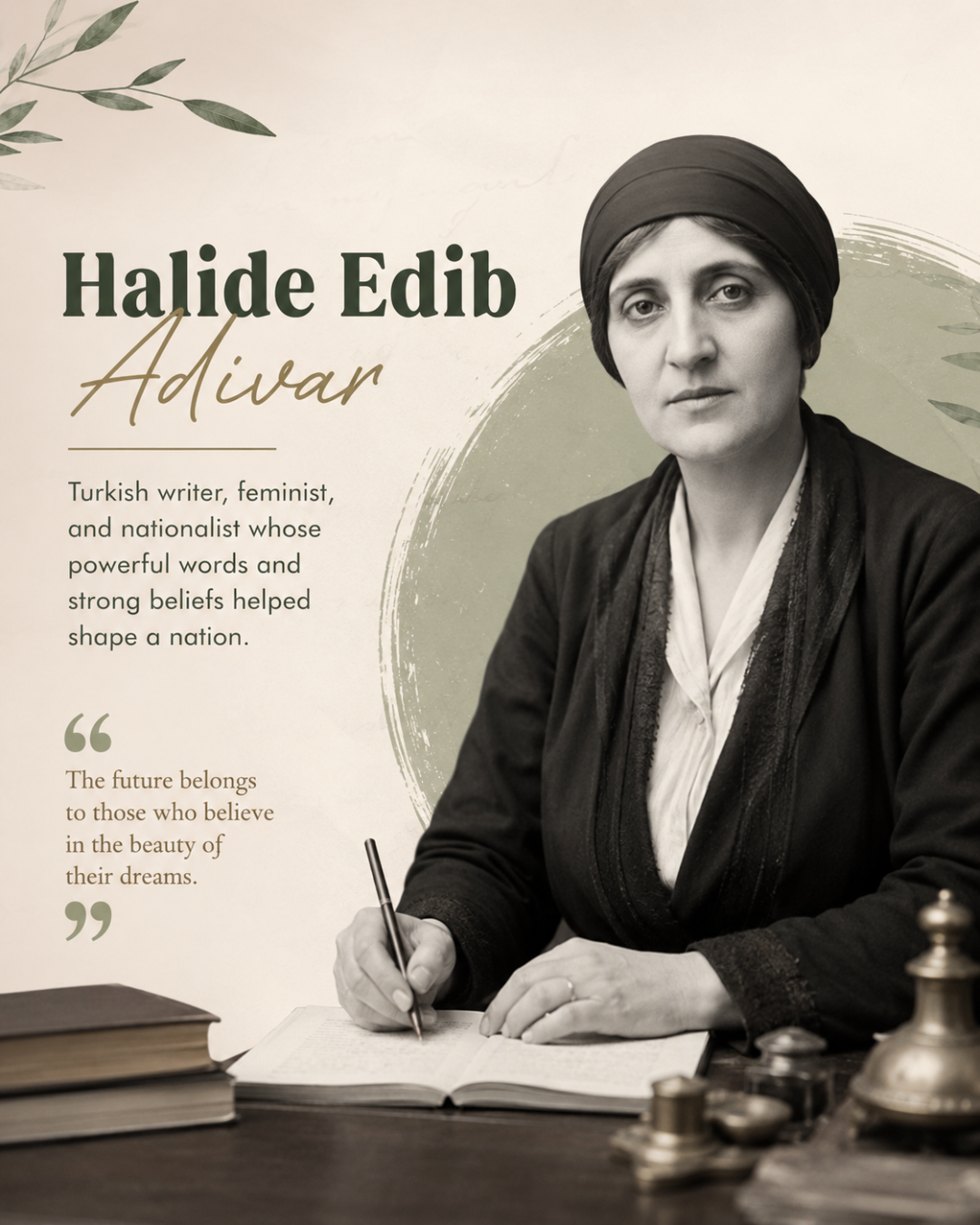
Born in 1884 in Istanbul, Halide Edib Adıvar grew up in a time when opportunities for women in the Ottoman Empire were limited. Yet, she defied expectations from an early age. Educated at home by private tutors and later at the American College for Girls, she mastered multiple languages and developed a deep love for literature. By her early twenties, she was already making her mark as a writer, publishing essays and short stories that challenged traditional gender roles. 📖
Halide Edib’s literary career flourished with novels like Handan (1912) and Ateşten Gömlek (1923), which explored themes of love, identity, and the struggles of women in a changing society. Her works were not just stories—they were calls for social reform. She became one of the first Turkish women to write openly about feminism, advocating for education and equality at a time when such ideas were radical. 💡
But her contributions went beyond the written word. During the Turkish War of Independence (1919–1923), Halide Edib took to the streets, delivering speeches that rallied support for the nationalist movement. She worked closely with Mustafa Kemal Atatürk, even serving as a corporal in the army, though her relationship with the new republic later became strained due to political differences. Despite this, her role in the war cemented her legacy as a patriot and a symbol of resistance. ⚔️
After the war, she continued to write and teach, spending years abroad in Europe and the United States, where she shared her ideas on education and women’s rights. She returned to Turkey in the 1930s and remained an active voice in literature and public life until her death in 1964. Today, Halide Edib Adıvar is remembered as one of Turkey’s most influential writers and a pioneer for women’s rights. Her life story is a testament to courage, intellect, and the power of words to shape a nation. 🇹🇷✨