
 English
 Turkish
 Hindu
Hindu
 Other
Other







Uğur Mumcu: The fearless journalist who shaped Turkish investigative reporting
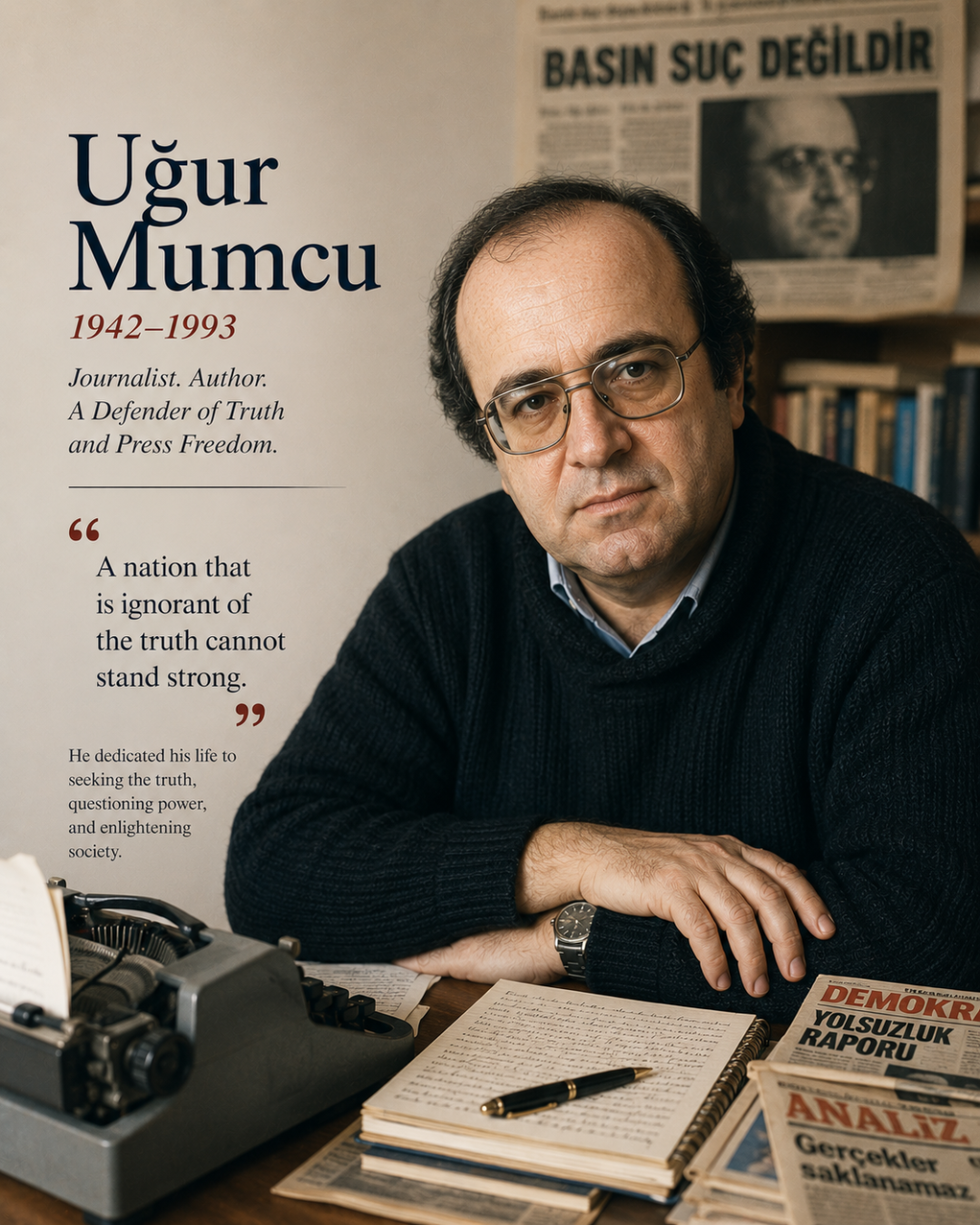
Uğur Mumcu (1942–1993) was a Turkish investigative journalist and author whose work exposed corruption, political scandals, and human rights abuses. Born in Kırşehir, he studied law at Ankara University before turning to journalism, where he quickly made a name for himself with his sharp analysis and fearless reporting.
Mumcu’s career was defined by his commitment to uncovering the truth, even in the face of danger. He wrote extensively on topics such as the Kurdish conflict, political assassinations, and the influence of intelligence agencies in Türkiye. His columns in Cumhuriyet, one of Türkiye’s oldest newspapers, became essential reading for those seeking independent journalism. 📖
In 1993, Mumcu was assassinated in a car bombing in Ankara, a crime that remains unsolved. His death shocked the nation and sparked widespread protests, with many believing his murder was linked to his investigative work. Despite his untimely end, his legacy endures through the Uğur Mumcu Investigative Journalism Foundation, which continues to support independent journalism in Türkiye.
Mumcu’s books, including Rabıta and Kürt-İslam Ayaklanması, remain influential, offering deep insights into Türkiye’s political landscape. His life serves as a reminder of the importance of press freedom and the risks journalists take to hold power to account. 🕊️
Timeline of Key Achievements:
- 1942: Born in Kırşehir, Türkiye.
- 1965: Graduates from Ankara University Law School.
- 1975: Begins writing for Cumhuriyet, becoming one of Türkiye’s most respected columnists.
- 1987: Publishes Rabıta, exposing ties between Turkish politicians and foreign organizations.
- 1993: Assassinated in Ankara; his death sparks nationwide outrage and protests.
- 1994: The Uğur Mumcu Investigative Journalism Foundation is established in his honor.